
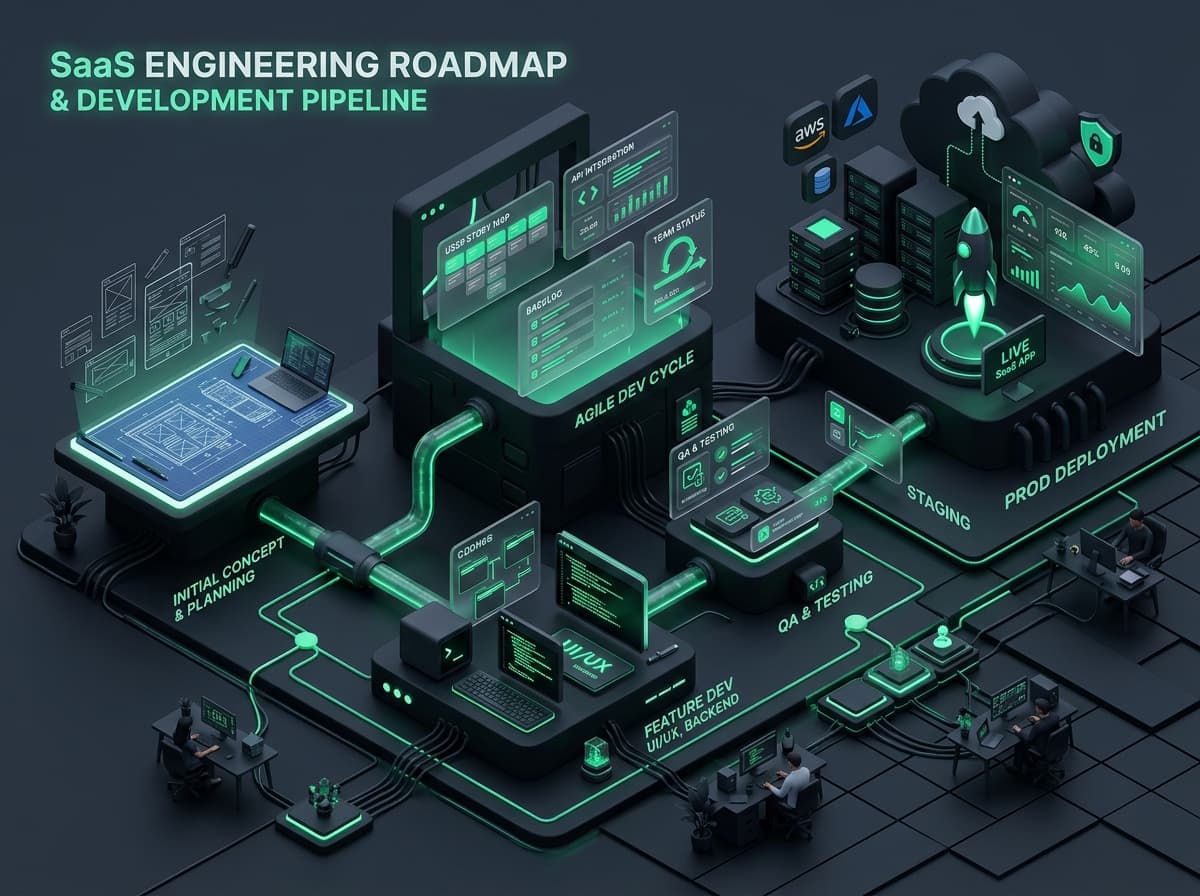
Case studies usually show you the finished product and a tidy list of results. What they skip is the middle part, the weeks where the architecture is still wrong, the client changes their mind about a core feature, and you're rebuilding a data model you thought was settled. I want to walk through that part, using a real client SaaS platform I built, Trusts Advisor, as the example.
To be clear upfront: this was a product I architected and built for a client. Not something I own or run. That distinction matters for how I approach every decision on it, because I'm building for someone else's business risk, not my own.
It starts with a business problem, not a feature list
The client didn't come to me with a spec. They came with a problem: their existing process for managing trust and estate advisory work was stuck in spreadsheets and email threads, and it didn't scale past a certain number of clients.
My first job wasn't writing code. It was translating a messy real-world workflow into a data model that could actually hold up under growth. This is the part junior developers skip and senior ones spend the most time on. Get the data model wrong here and every feature built on top of it inherits the mistake.
The architecture decisions that actually mattered
Multi-tenancy from day one. Even though the client launched with a handful of users, I built the data layer assuming multiple organizations would eventually use the platform independently. Retrofitting multi-tenancy after launch is dramatically more expensive than designing for it early, even if it adds a bit of complexity upfront.
Role-based access as a first-class concern. Trust and estate advisory work involves sensitive client data with real legal exposure. Permissions weren't a feature to add later. They were part of the schema design from the first migration.
Boring technology where it counted. I didn't reach for the newest tooling on the parts of the system handling sensitive financial and legal data. Proven, well-understood technology choices there, more experimentation on the parts of the product with lower stakes, like internal dashboards and reporting views.
Where the plan changed mid-build
About six weeks in, the client realized their advisors needed a completely different permission structure than what we'd designed, one advisor could sometimes act on behalf of another for coverage during time off. That's not a small tweak. It touches the core authorization logic.
I want to be honest that this kind of mid-project pivot is normal, not a failure of planning. The client couldn't have known this requirement existed until they saw the early version of the permission system and it triggered the realization. Good architecture makes pivots like this expensive but survivable, not catastrophic. That's the actual test of whether your foundational decisions were sound.
What the client actually cared about at the end
Not the tech stack. Not whether I used the trendiest framework. They cared about three things: could their advisors trust the platform with sensitive client data, did it save them real time compared to spreadsheets, and could it grow with them without needing a rebuild in two years.
Everything I built was in service of those three outcomes. The specific technical choices were just the means.
What I'd tell another founder building something similar for a client
Resist the urge to start writing code before the data model is genuinely settled. Every week spent getting the schema right upfront saves multiple weeks of migration pain later. And build for the client's actual risk profile, not the one you'd choose for your own product. A client handling sensitive data needs more conservative technical choices than a scrappy MVP for a consumer app, even if the conservative choice is less exciting to build.
The bottom line
The finished platform looks clean in a case study screenshot. Getting there involved real pivots, a data model rebuilt more than once, and a lot of conversations that had nothing to do with code. That messy middle is the actual work. The clean result is just what's left visible afterward.
Suggested internal links: Link to Day 13's multi-tenant architecture deep dive and Day 4's Devinsol founding story.
CTA: Need a technical partner who thinks in business outcomes, not just code? Book a call.